
Searching Dale County Criminal Dockets
For remote lookup, Alabama sells access through Just One Look. The paid service covers Dale County Circuit and District criminal cases. It offers basic case information, status, Court Setting Dates, party details, financial history, Court Actions and Rulings, and the full Case Action Summary. A case-number search costs $9.99. It includes one case detail. A name search costs the same and includes one detail. Each later case selected costs another $9.99. You will need an account to purchase.
Free options exist. The Circuit Clerk's Ozark office preserves public inspection of the electronic Dale County criminal docket. Any available public images can be viewed there too. Call 334-774-5003. Email delores.woodham@alacourt.gov to confirm the division, current hours, older-file availability, or a copy quote. Once the amount and postage are confirmed, mail a focused request to P.O. Box 1350, Ozark, AL 36361. Alacourt.com works as the subscription reader. AlaFile handles e-filing, not public docket search.
- Identify the issuing court and copy the exact criminal case number from a notice or pleading.
- Search Just One Look, use an authorized Alacourt.com account, or visit the Dale County clerk terminal.
- Confirm the court, case style, status, and charge before reading the dated event list.
- Check Court Setting Dates against later orders, continuances, or resets.
- Ask the clerk for a plain or certified image when the event label alone is not enough.
Dale County Criminal Charges Versus Outcomes
A complaint, warrant, or indictment is only an accusation. It is never a conviction by itself. The Dale County criminal docket keeps the charging entry even after a later dismissal, nolle prosequi, acquittal, plea, or judgment, so read through to the most recent relevant disposition rather than stopping at the first charge line. A financial balance does not substitute for the outcome entry either.
Settings deserve the same care. Arraignment states a charge and receives a plea. A motion hearing takes up a particular request. Docket call often just checks readiness across many cases. None of those entries alone proves how the Dale County case ended. Open the related public order or judgment image when one is available, because a portal print is informational while the Circuit Clerk supplies a certified court document.
- Disposition
- The recorded procedural or merits outcome for the case or charge.
- Nolle prosequi
- The prosecution elects not to proceed with a charge at that time.
- Setting
- A scheduled court event, not a final result.
- Sentence
- The court's consequence after a qualifying judgment or plea.
Note: Rely on the signed order or judgment where available, since a short Dale County docket label cannot carry every condition or finding.
Inside a Dale County Criminal Docket
The Case Action Summary works as the dated index for a Dale County criminal court file. Depending on the case and access rule, it can show division and case number, style, judge, filing date, status, parties and attorneys, charge and disposition fields, settings, actions, costs, and public document images. Coverage depends on the case and the access rule. The summary tells you what entered the court record. The underlying image tells you what a complaint, motion, or order actually says.
| Case number | A division identifier such as CC-YYYY-number for Circuit Criminal or DC for District Criminal. |
|---|---|
| Charge | The accusation or offense field, which must be kept separate from the outcome. |
| Court settings | Arraignment, motion, docket call, trial, plea, sentencing, or review dates where listed. |
| Actions and rulings | Dated complaints, returns, motions, notices, orders, continuances, and judgments. |
| Disposition | The recorded result, such as dismissal, nolle prosequi, acquittal, plea, or conviction when public. |
| Images | Public filed papers and attachments available behind the event index. |
Begin with the court and the case number. Then trace events in date order, and return to the current setting and outcome fields at the end. That reading order helps you avoid mistaken conclusions drawn from stale settings or early allegations.
Dale County Criminal Filing Scale
The official Dale County court page reported 1,760 new Circuit cases in 2017. Of those, 51 percent were classified as criminal. Applying that rounded share across the total gives about 898 cases. Treat the result as an approximation only. District Court reported 7,038 filings. Of those, 17 percent were criminal and 49 percent were traffic. Because the published shares are rounded, do not use them as exact live totals.
That workload explains why name searches can mislead. A common name may point to more than one record, and a District complaint may later be joined by a Circuit indictment path. Separate them by court, prefix, year, and case number. The figures describe one historical year, not the number of open cases today.
How a Criminal Case Moves
A Dale County felony often starts with a complaint, warrant, and preliminary District Court events. A grand-jury indictment then creates or advances the Circuit Court case. Circuit Court handles the case from arraignment forward. It records arraignment, plea, motions, settings, continuances, trial or plea, sentence, judgment, and any appeal. A misdemeanor generally stays in District Court. It leaves only for a municipal matter or an indicted or felony-connected exception. Not every file uses every stage.
Typical docket flow: Complaint or warrant → preliminary events → indictment when applicable → arraignment → pretrial motions and settings → plea or trial → disposition → sentencing → appeal.
A later action never erases an earlier one. When a hearing is reset, the former setting and the later notice may both remain in the Dale County Case Action Summary. The newest signed order or notice controls, subject to confirmation with the court. Calling the clerk does not move a date. Only authorized court action does that.
Dale County Criminal Docket Appeals
A municipal ordinance prosecution stays with the city clerk. It moves only when a proper appeal reaches Dale County Circuit Court. District criminal matters can also reach Circuit Court. Trial de novo applies there where the law allows. A de novo appeal means a fresh trial. It is not a review limited to the lower court's docket. Under Criminal Rule 30.4, the lower clerk must transmit its record within 14 days after the appeal is perfected. For the full criminal process and appeal framework, the Alabama Rules of Criminal Procedure library is the official source.
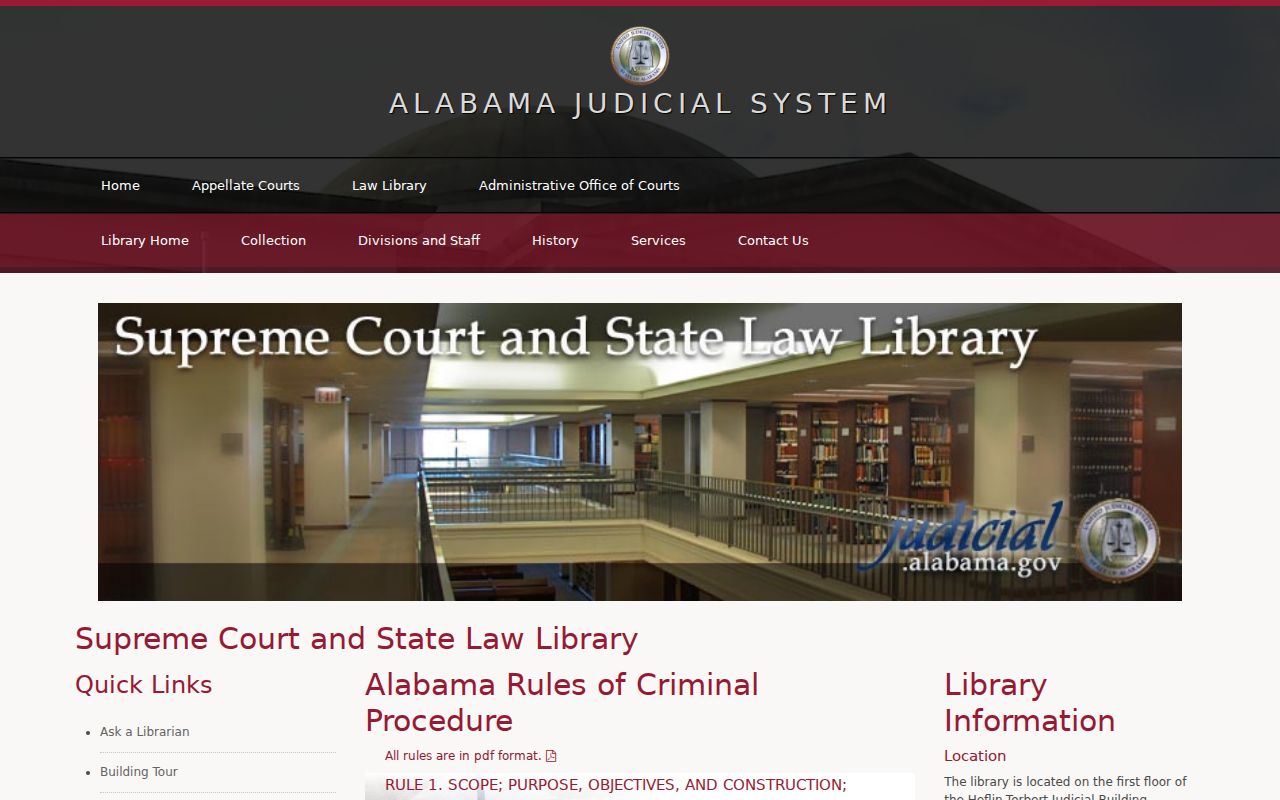
An appeal does not erase anything. When a case leaves Municipal or District Court, the Dale County Circuit docket becomes a second, separate record covering the de novo trial. The earlier docket stays public and intact.
Take the case higher. A third record then appears in the Alabama Court of Criminal Appeals. Watch the Dale County trial docket for the notice of appeal, record preparation or transfer, and the result sent back down. Each layer adds history rather than replacing what came before. Knowing which court acted tells you where to read.
Courts That Hold Criminal Dockets
Which court holds the record depends on the charge. Circuit Court keeps Dale County felonies. It also keeps indicted misdemeanors in the applicable setting and de novo appeals. District Court takes most state misdemeanors. It handles felony preliminary proceedings, noncapital felony guilty pleas within its authority, and state traffic. City ordinance violations and municipal misdemeanor or traffic matters sit in Municipal Court. One event can therefore leave docket entries in several courts over time. Match the charge to the issuing authority. You will know where the criminal docket lives.
| Dale County court | Criminal docket role | Custodian |
|---|---|---|
| Circuit Court | Felony, indicted-misdemeanor, and de novo appeal matters | Dale County Circuit Clerk |
| District Court | Misdemeanors, preliminary felony matters, and state traffic | Dale County Circuit Clerk |
| Municipal Court | City ordinance and municipal misdemeanor or traffic matters | The issuing city's clerk or magistrate |
Three clues point the way. Check the officer or agency on the citation, the case-number prefix, and the court named on the most recent notice. Was a city record appealed? Then ask both the municipal clerk and the Dale County Circuit Clerk which docket now holds the item you need.
Free Dale County Criminal Docket Inspection
Alabama Privacy Rule 401 and Judicial Administration Rule 33 give the public free viewing of electronic Dale County Circuit and District court data. That viewing happens at the clerk office during regular hours. The local notice sets counter hours of 8:00 a.m. to noon and 1:00 to 4:30 p.m., Monday through Friday. Visit at 100 East Court Square in Ozark. Call first. Another official site footer lists broader hours, and a long trip deserves a quick check.
Bring the case number, party names, a rough filing year, and the likely criminal division. Request the public-access computer or electronic case-record terminal. A needed image that is public can be inspected right there. Viewing is free; paper is not. Rule 30 sets $5 for certification, and the AOC chart lists per-page copy amounts. Mail requests should name the exact item by title and date. Do this once the clerk quotes the total.
Need a transcript? Contact the court reporter, not the docket clerk. Give the hearing date and assigned judge, then ask about availability and price. A transcript is not an ordinary Case Action Summary image.
Sealed Dockets and Public Access
Public does not mean everything. Alabama Code §12-15-133 protects juvenile legal and social files. Youthful-offender records stay generally nonpublic under §15-19-7. A court may also seal a Dale County record, in whole or part, under Privacy Rule 301. That step comes after the required hearing and written findings. Expect redactions too: protected victim information, full account numbers, and similar confidential data can be removed from the public version of the docket.
A missing result has several possible causes. Verify the court and number, check municipal custody, ask about an old archive, and recognize that juvenile, youthful-offender, or sealed records may lawfully be withheld.
The official juvenile confidentiality statute sets limits on who may inspect those records.
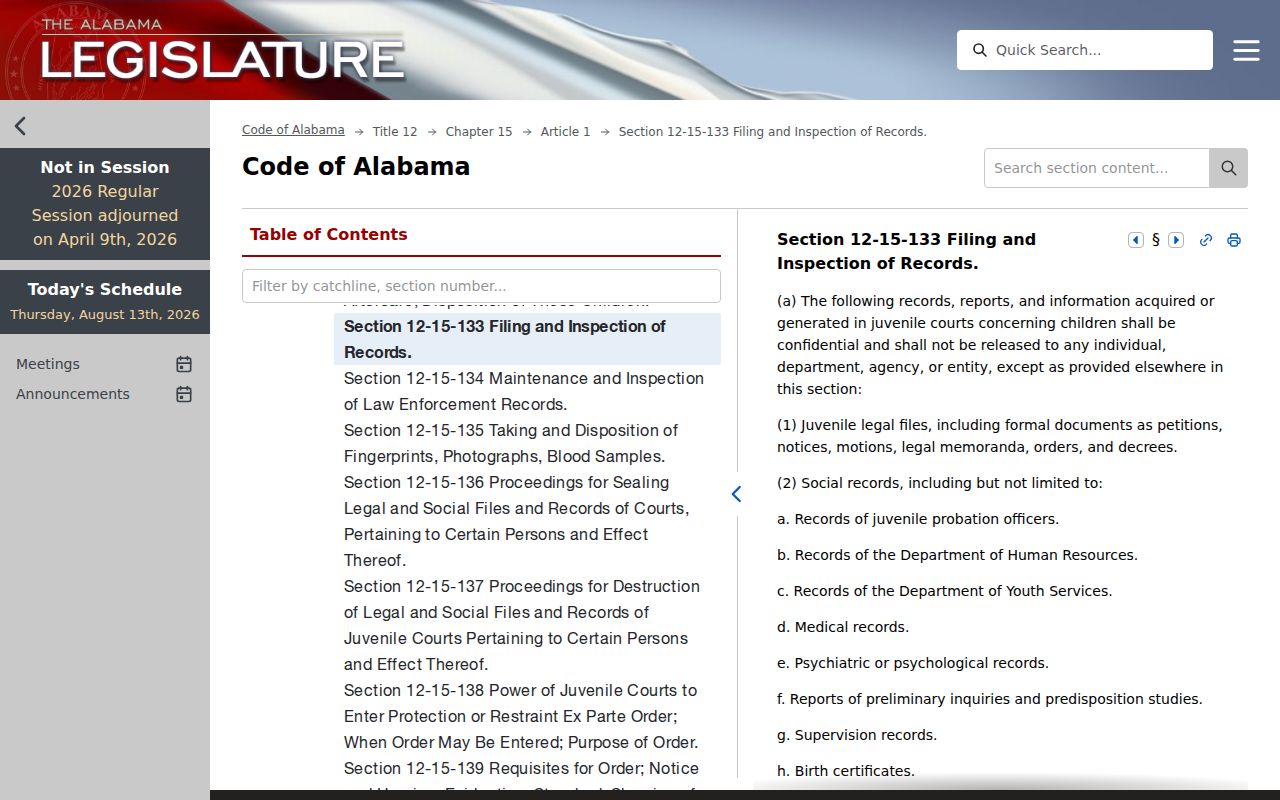
The statute is why a juvenile Dale County case will never read like an ordinary public criminal docket. Its protections are built in.
Suppose one attachment is restricted. Ask whether a public Case Action Summary or a redacted portion remains available. Rules 103 and 303 govern that. A public requester should never press staff to disclose protected facts. Someone legally entitled to access should instead ask the custodian of the record. Ask what order, authorization, or identification is required.
Dale County Criminal Docket Resets
A Dale County criminal setting can change while the old date lingers in the history. Do not stop at the first entry. Search the Court Setting Dates component. Then check the later Court Actions and Rulings for a continuance, reset, amended notice, signed order, or disposition entered after the original setting. Confirm the new date, time, courtroom, and setting type with the assigned court office.
The published Circuit judge office numbers for Dale County are 334-774-8011 and 334-774-3726. District judge offices list 334-774-4431 and 334-774-7008. Have the case number in hand. Staff can confirm access and schedule information, though they cannot advise a party what motion to file or whether to seek a continuance.
For a wider number-or-name search before checking the setting, use the Dale County case lookup process. Dale County offers no permanent remote-hearing link and no free standalone daily criminal calendar. Permission to appear remotely must come from the court itself.